Part 1 · The kitchen
1The cook's trade
1.1 The origin of the restaurant
▶ LectureInns and taverns
Selling cooked food is an ancient tradition. It goes back to the first civilizations. Places to eat grew in step with the development of cities and towns. In the Roman Empire and in ancient China, farmers took animals and goods to city markets. The trip could last several days, so they needed food and a bed along the road. The roadside inn met that need, and it was the earliest kind of restaurant.
An inn usually stood out in the country. Travelers sat together at one shared table and ate what the cook had made that night. Nobody chose a dish, because there was no menu.
Through the Middle Ages and on into the Renaissance, Europeans still bought ready meals mainly at taverns and inns. The food was simple, the same kind eaten in the homes of peasants and merchants. In Spain the eating houses were called bodegas, and they served tapas, small savory Spanish dishes. In England people ate sausage and shepherd's pie. In France the offer was soups and stews.
Guilds, and the fight over a stew
In medieval France, groups called guilds held monopolies over many prepared foods. Each guild owned its own kind of food, and selling it without belonging to that guild was against the law. Only the charcutiers, for example, could sell cooked meat.
| Guild | Its foods |
|---|---|
| Rotisseurs | meat roasted on spits |
| Patissiers | poultry, pies and tarts |
| Tamisiers | bread |
| Vinaigriers | soups and stews |
| Traiteurs | ragouts |
| Porte-chapes | feasts and celebrations |
Under this system, an inn's main job was to give people a bed and a drink, and guild members brought the food in. In 1765 a Paris shopkeeper named Boulanger, whose shop was near the Louvre, put cooked lamb into the stew he sold. The caterers' guild took him to court, and Boulanger won. In the twenty years before the Revolution, more shops like his opened across Paris.
The French Revolution, which sent Louis XVI and Marie Antoinette to the guillotine, swept the guilds away. Chefs who had cooked in noble and even royal houses were suddenly out of work. Many of them opened restaurants in Paris. They brought the look of aristocratic dining with them: fine china, cutlery and linen on the tables, now open to a whole new class of customers. Their menus also offered more choice than before.
The first true restaurants
▶ LectureThe new restaurants of the late 1700s borrowed upper-class habits. Guests no longer shared one table, as they had at inns. Each party had a table of its own, held for them by reservation, which was a new idea at the time. Antoine Beauvilliers was the first to offer a menu: a list of dishes served at set hours, at separate tables, in his Grande Taverne de Londre. Menus hung in frames, and at the end of the meal each guest was handed a check adding up the bill. China, cutlery and tablecloths became the marks of fine dining that they still are.
Some of these chefs-turned-owners grew rich. Many of their customers were provincial deputies who had come to Paris after the Revolution. Clever owners added comforts such as bathrooms, and charged guests to use them. Before the Revolution Paris had fewer than 50 restaurants. By 1814 a popular travel guide, the Almanach des Gourmands, listed 3,000.
Fine dining goes around the world
Paris kept adding restaurants through the 1800s. The same century brought the café, where there is no table service: customers order at a counter and serve themselves. Outside Paris, soup kitchens and dairy shops sold cheap home-style cooking to working people.
By the end of the century, steamships, railways and then cars had changed travel. Luxury tourism grew. Eating well far from home stopped being a mere need and became part of the pleasure of a trip, and dining at famous Paris cafés and restaurants was part of the tour.
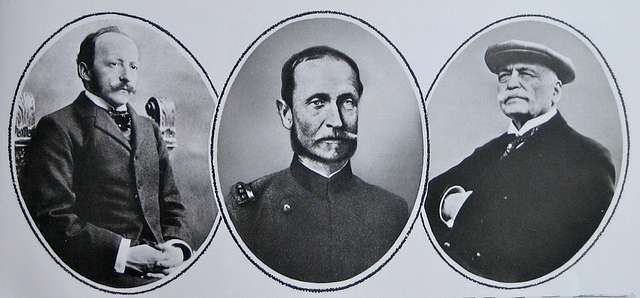
The biggest single influence on today's fine restaurants came from a partnership. César Ritz, a Swiss developer, worked with the French chef Auguste Escoffier to build the Grand Hotel of Monte Carlo. It was the first place to offer luxury rooms and gourmet food in one building. Ritz was the genius of service, décor and promotion. Escoffier brought in the brigade system to run the kitchen and cut the French sauces down to five mother sauces. He is known as the father of 20th-century French cuisine. Luxury hotels soon opened all over Europe.
In the 20th century the French restaurant spread across the globe; in Italy it became the ristorante. In the United States, the idea of the restaurant become an organic creation, continually changing and evolving in search of customers and profit. Before the century ended, American restaurants had given the world chains and modern fast food, and later a return to farm-to-table cooking.
How cooking styles changed
- Grande Cuisine (the 1600s and early 1700s): tables were loaded with dishes, set out like pieces of architecture. Diners sat down and ate whatever they could reach.
- Antonin Carême refined these dishes and served them across dozens of courses. He studied classical architecture so that he could build better confectionery showpieces.
- Cuisine Bourgeoise: other chefs mixed Grande Cuisine with the plainer dishes of the middle classes, and this new style was the result.
- Cuisine Classique: Escoffier refined Carême's Grande Cuisine into this modern form and carried French cooking into the 20th century.
- Nouvelle Cuisine (the 1950s): cooks put the natural flavor of food first. Broths and reductions took the place of roux and cream sauces, and food became lighter. Early masters included Paul Bocuse, Fernand Point, Roger Verge, Alain Chapel, and the brothers Jean and Pierre Troisgros.
- New American Cuisine: around 1971 a new idea took hold in America, fresh food cooked simply. Its leading figure was Chef Alice Waters at Chez Panisse, in California. Waters turned away from processed, packaged food and cooked fresh, seasonal, organic produce, fish and meat so that each kept its natural flavor.
America also has regional cooking of its own. Cajun and Creole cooking began to form in the early 1700s, out of what French, Spanish, African, German, English and Italian arrivals brought and what Native Americans already knew. It was the country's first regional cuisine. Other regional styles came later:
- Tex-Mex
- Southern soul food
- Florida cooking
- the Gee Chee and Gullah cooking of the Carolinas
- Pacific Rim
- Appalachian cooking
- three schools of barbecue, from Texas, Memphis and the Carolinas
In the 1950s Americans also took to fiery hot cooking from other cultures, such as:
- Mexican
- Hunan
- Szechuan
- Thai
- Korean
1.2 The brigade and who does what
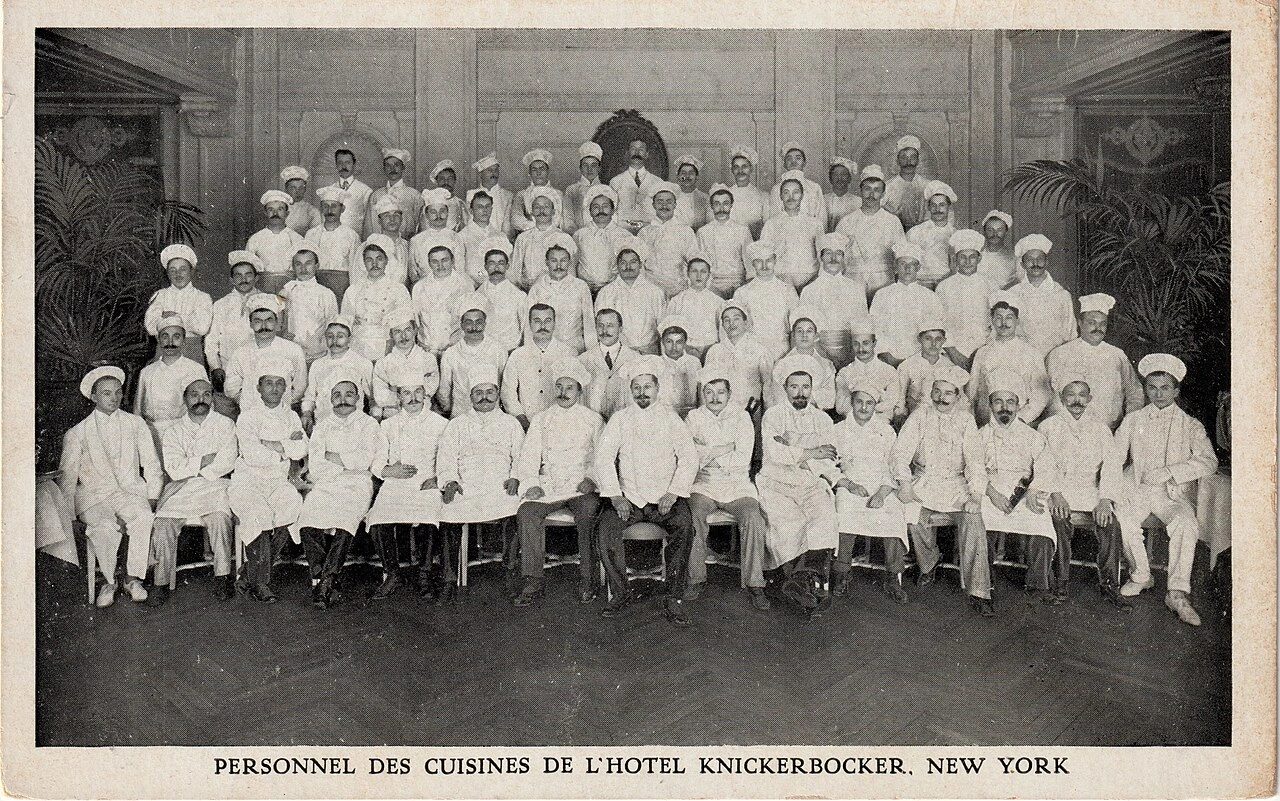
Many of the job titles in a professional kitchen are of French origin. That is no accident: the restaurant as a business took its modern shape in Paris around the time of the French Revolution, and the brigade kitchen labor system that still organizes big kitchens was the work of a renowned French chef, Auguste Escoffier.
Ranks in the classic brigade
- Chef de cuisine: also called the executive chef. The head of the whole kitchen, its general.
- Sous chef: the under-chef and second in command. Supervises and coordinates the station chefs, and takes over when the chef de cuisine is away. During service the sous chef may also work as the expediter, or aboyeur. Usually this cook is training to become a head chef.
- Chef de partie: a station chef. Each one is responsible for one part of the meal, and stations are split up by the ingredients they handle or by the cooking method they use. Several demi-chefs and commis usually work under each one.
- Demi-chef: an assistant station chef. Does most of the real cooking at the station, under the chef de partie, and runs the station when that chef is away.
- Commis: an attendant placed at one station and given the plainer, lower-skill jobs. A commis is usually training to become a demi-chef.
- Apprentice: the lowest rank. Apprentices do the heavy lifting while they study, and they work through every station so that they are ready to move up to commis and beyond.
The stations
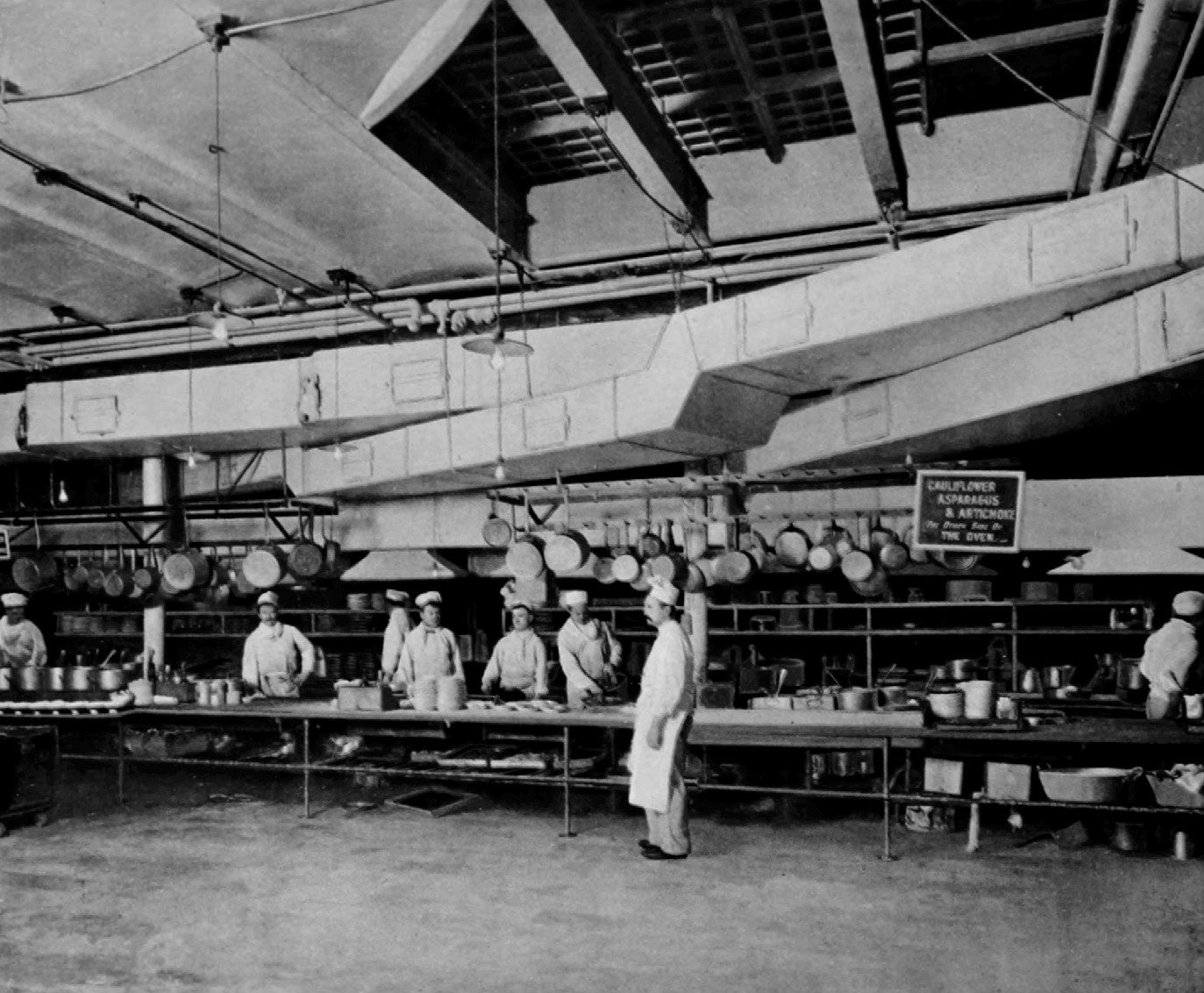
Not every kitchen has every station, but a kitchen will include some of these.
| Station | Who makes what |
|---|---|
| Saucier | sautéed dishes |
| Poissonier | fish and shellfish |
| Friturier | fried food, mostly deep-fried |
| Grillardin | grilled and broiled food |
| Rotisseur | roasts, braises, and the stuffings that go in them |
| Potager | stocks and soups; helps the saucier and is seen as a lower-skill post |
| Legumier | vegetable dishes |
| Entremetier | the potager's and legumier's work together: vegetables, soups and stocks |
| Garde manger | cold food of every kind: salads, cold meats, pâtés, terrines, sausages, hors d'oeuvres, carved garnishes and buffet items |
| Boucher | butchering meat and preparing poultry and fish; may hand them on to the garde manger to share out among stations |
| Charcutier | pork products: hams, sausages, rillettes, pâté, pâté en croûte and other cured meats; may work with the garde manger |
| Patissier | pastry; heads the confiseur (petits fours and candies), the glacier (cold and frozen desserts, and perhaps ice sculptures), the decorateur (decorated cakes) and the boulanger (breads, rolls and cakes) |
The modern brigade
Few restaurant kitchens today use the full classic brigade. It is still found where cooks turn out huge amounts of food, such as on big cruise ships.
- Executive chef: the top chef, in charge of everything in the kitchen. Writes the menu, orders supplies, manages the staff, and reports to the owners or managers. An executive chef may run several kitchens, for example in a hotel or resort with more than one restaurant. In some places the executive chef spends much of the day cooking rather than doing paperwork.
- Chef de cuisine: the head chef of one kitchen. Reports to the executive chef, or to the owner when the owner runs the kitchen. Sometimes one person holds both jobs.
- Sous chef: next in line, and in charge whenever the head chef is not there. Watches over how dishes are prepared, portioned and presented, so that each one meets the head chef's standard.
- Area chefs: the modern station chefs, each responsible for one area of the kitchen. They may have line cooks under them, or the line cook and the station chef may be one job. In modern kitchens these duties may rotate.
- Line cooks: work for an area chef and hold one position in that area.
- Expeditor (aboyeur): takes the orders from the servers, calls them out to the kitchen, and keeps every dish moving together. May check each finished plate and add the last touches, then makes sure servers take plates out quickly and correctly, sometimes carrying them out personally.
A busy kitchen also needs dishwashers and other workers who do not appear in any brigade chart.
The garde manger: keeper of the food
The name garde manger means keeper of the food. Before the French Revolution, the garde manger worked in castles with no refrigerator and no air conditioning. Meat was kept in the coolest part of the lower floors, perhaps chilled by the water of the moat. Pig, deer, rabbit and birds from the forest were preserved so that they kept longer, filled people up and were worth more. In Carême's time, ice was sawn from frozen lakes in winter and stored underground, packed in straw and dirt.
The old skills are popular again. Chefs are making charcuterie, a word that means cooked flesh, and serving it on boards with cheese. Some build layered salads set in aspic, or add a gelée that melts on the tongue to give a cold dish moisture. The cold kitchen runs from everyday cold food to competition platters and molecular gastronomy.
A modern commercial kitchen uses heavy machines, and each one must be learned: how it goes together, how it comes apart, how to clean it and how to store it.
- Food processor: blends, purées, slices and grates. The usual mistake is pulling the bowl off before taking the lid off, which breaks the pin in the bowl handle that connects to the motor.
- Tabletop mixer: the cold kitchen uses 5-quart and 20-quart sizes to mix sausage meat with fat and spices.
- Meat slicer: cuts bacon, salami, speck and other charcuterie into even slices. It is dangerous. Wear the right gloves and clean and sanitize it fully, on schedule.
- Buffalo chopper: a fast, high-volume chopper. In the cold kitchen its main job is the smooth meat paste for emulsified sausages such as frankfurters. The bowl turns while the blade spins, and ice keeps the cold emulsion from breaking. Sanitize it before use, then clean, sanitize and put it back together after.
- Vacuum sealer: seals food for sous vide, storage, curing and freezing. Check it for lubrication regularly.
- Sausage stuffer: comes with tubes in different sizes for different casings and kinds of sausage.
- Meat grinder: a screw called the worm, or auger, carries the meat forward to the blade and pushes it through the die, which sets the size of the grind. Chill the parts first and put them together correctly.
What the work asks of a cook
Hospitality means working so that other people can play. Holidays are busy days. Dinner starts after 5 p.m., just as most people finish work. Weekends belong to the guests, so a cook's days off, if there are any, are often Monday and Tuesday. Put plainly, "Strong work ethic is the price of admission in food service."
The people who accept this join a hard-working, fun-loving group who enjoy making others happy. Those who cannot accept it usually move on.
Other traits that serious cooks and chefs share are listed below.
- Dependable. This matters more than anything else. A good cook turns up when needed, never lets quality slip, and puts the team and the business first.
- Competing with themselves. The best cooks are never satisfied with today. They ask how even a well-liked dish could be better.
- Goal driven. A small goal and a goal that could make or break the restaurant get the same effort: meet it or beat it.
- Creative and willing to dream. Guests are mostly served food they feel safe with, but chefs also bring in new dishes that guests learn to love, which keeps a restaurant growing.
- Pushing others. Good cooks critique the people around them, always with a solution, and remind everyone of the big picture.
- Organized. Without order a kitchen is chaos. Mise en place, gathering and readying everything a recipe needs before cooking starts, is the first skill a cook learns.
- Loyal. Cooks look out for each other, even beyond their own kitchen; anyone who wears kitchen whites can count on the support of others who do.
- Street smart. They can tell truth from nonsense and opportunity from danger, which helps a cook become a good leader.
- Using all five senses. Cooks plan for taste, touch, sight, smell and sound in a meal.
- Storytellers. A chef's menu tells the story of a career and of the dishes that mattered, and it shows which preparations the chef is comfortable with.
- Proud. Cooks are proud of their work, their skills, their team and what they do for others.
Good habits in a working kitchen
A training kitchen runs on a few simple habits, and they carry straight into a career.
- Learn what each piece of equipment is and where it lives. Put tools back in their place after use, so the next person can find them. An organized kitchen means lower labor costs, happier customers and bigger profits.
- Arrive in full uniform. Wash your hands, then set up your station and sanitize the work area, your knives and your cutting board.
- Write a game plan before you cook: the ingredients, the equipment and each step of the recipe. Then you do not lose time reading the recipe while you cook. Picturing the steps in your head as well as practicing them helps you succeed.
- Gather all your mise en place in pans before you begin.
- Leave your phone alone, keep talk to what the work needs, and tell the chef before you step away.
- Wash dishes as you go rather than leaving them piled at the sink.
- Think one step ahead. Hot food goes on warm plates and cold food on cold plates.
- Keep a good attitude and take criticism well. Everyone makes mistakes, and a classroom is a better place to make them than a restaurant.
- Keep using what earlier lessons taught you. Do not wash away the suc, or fond, in the pan when a dish needs it for flavor; keep up sanitation every day, not just for the inspector.
1.3 Writing a menu
What a menu is
For many guests, the food matters more than anything else about eating out, so the menu does much to make a restaurant popular and to sell food and drink. A poorly planned menu can spoil even a very good dinner.
Where menus came from
The word menu goes back to 1718, but the habit of listing dishes is older. In 1541, so the story goes, Duke Henry of Brunswick was seen checking a long strip of paper. It was a program of the dishes still to come, so he could save his appetite for the ones he wanted. This may be how menu cards began.
For grand ceremonial meals, a bill of fare used to hang on the wall so kitchen staff could follow the order of service. Modern menus came in the 1800s, when the Paris restaurant Palais Royale gave guests a small, handy copy of the menu posted on its door. By the middle of that century menus were placed at the end of the table, and later each guest got a menu of their own.
What a menu does
- Informs. It tells guests what food there is, how it is cooked and served, and what it costs.
- Orders. It puts dishes in a sensible sequence, usually under course headings, so the menu is easy to follow.
- Sets choice. It decides how free the guest is to choose.
- Shows image. It presents the style and character of the restaurant.
- Sells. Well-written descriptions make dishes appealing and lift sales.
To do all this, a menu must be accurate, clear, informative and well designed. Every dish on it should always be available and arrive exactly as described. A guest who chooses a dish and then hears it has run out, or gets something different, is let down.
Styles of menu
- À la carte, meaning "from the card": a list of every dish the kitchen can make. The guest builds a meal from it and pays the total of the dishes chosen. Here the server can use suggestive selling, helping guests combine dishes they will enjoy.
- Semi à la carte: a mix. Some dishes have their own price and are ordered singly; others carry a price that covers other items too.
- Table d'hôte, meaning from the host's table: a meal in several courses, with little or no choice, at one fixed price.
Menus are also sorted by how often they change.
- Static menu: the same dishes for every guest, every day.
- Cycle menu: written for a set period, then repeated from the start.
- Market menu, also called a seasonal menu: built on what the market has.
- Hybrid menu: a mix of static, cycle and market menus.
The classical French menu of twelve courses
| Course | What is served |
|---|---|
| 1. Hors d'oeuvre | small, elegant, tangy or salty bites to wake the appetite: potato salad, Caesar salad, caviar, smoked salmon, smoked ham, oysters |
| 2. Potage | soup, either clear (consommé) or thick (cream, velouté or purée); a clear soup is usually listed first |
| 3. Poisson | fish, usually poached, steamed or baked, with a sauce and vegetables |
| 4. Farinaceous | pasta, rice or gnocchi dishes, such as risotto, spaghetti or penne, served instead of fish; egg dishes may appear here at lunch, rarely at dinner |
| 5. Entrée | the first meat course at dinner, complete in itself: sweetbreads, vol-au-vent, tournedos |
| 6. Relevé (remove) | a large joint of meat, such as leg of lamb, roast beef or pork loin, with potatoes such as dauphinoise or duchesse |
| 7. Sorbet | the intermezzo, a pause in a long meal: a water ice flavored with champagne, liquor or a delicate wine, to settle what came before and wake the appetite for what follows |
| 8. Rôti | roast chicken, duck, turkey, pheasant, partridge or other poultry and game, with its sauce and gravy and a dressed salad |
| 9. Légume | vegetables as a course of their own, such as asparagus with hollandaise |
| 10. Entremets | a hot sweet such as a soufflé or rum omelette, with petits fours |
| 11. Savory | a small tasty bite on hot toast or fried bread, or a cheese platter with crackers, watercress and walnuts |
| 12. Dessert | a basket of fresh fruit, nuts and simple fruit tarts, with coffee |
The modern menu of seven courses
- Amuse: a refined savory of two or three bites, hot or cold, meant to stimulate the appetite and amuse the mouth.
- Potage: a soup, such as a bisque, consommé, purée or chowder.
- Poisson: fish, whole or filleted, with vegetables.
- Intermezzo: a sorbet of citrus or fresh fruit, not too sweet, to clean the palate.
- Entrée: the meat course, a portion of meat or poultry with a starch such as potato, rice or pastry; for example, beef Wellington, sliced, with sauce bordelaise.
- Dessert: the sweet course, perhaps a custard, pastry, pudding or mousse.
- Salad or cheese: for example endive or romaine heart with small tomatoes and vinaigrette, or a cheese course, or both. Coffee follows, or a ruby or tawny port with the cheese.
Planning a dessert menu
Dessert menus sell best when they stick to flavors people already love. Most guests see dessert as comfort food, so a new idea for its own sake rarely pays off. Chocolate always sells, but chocolate with beets will put most people off. Unusual ingredients belong at special events, tasting menus and catering.
A useful starting point is the five Cs.
- Chocolate: probably the best seller in any restaurant. Always offer one dark chocolate dessert; if you want a second, use white or milk chocolate. A good chocolate makes a simple dessert special, and a high-percentage, single-origin chocolate lets its flavors tell a story on the menu.
- Citrus: refreshing, and popular with guests who do not care for chocolate.
- Coffee: think of tiramisu, or an affogato, which joins coffee and dessert in one. Starting from a well-loved pairing like this and adding to it is a good way to design.
- Custard or cheesecake: cheesecake, crème brûlée, flan or bread pudding; rich, creamy desserts like these are always wanted.
- Caramel: toffee pudding, caramel parfait, candies, caramel apples, sundaes, and caramel ice cream with crunchy toffee.
More points to plan around follow.
- Write descriptions in plain, simple words.
- Avoid using one ingredient in two desserts.
- Use fruit when it is in season: guests have waited a year for it, it needs little work, and it lowers food cost. Where little fruit grows between seasons, use other ingredients.
- Not every dessert needs a frozen part.
- Offer only as many desserts as the kitchen can serve well on its busiest nights; five to eight is usually about right.
- Fit the menu to the restaurant's style, its cuisine and its guests, and to the season: lighter desserts in summer, richer and warmer ones in winter.
- Put the best sellers at the very top and bottom so guests read past the others. The eye tends to go first to the top right of a page, so a dessert that sells less well can go there.
- Keep portions small. A guest who wants just a little more is happier than one who cannot finish. Smaller portions also waste less, stretch each recipe further and lower food cost.
Designing one dessert
Once the main flavor is chosen, there are several ways in.
- Favorites: take a well-loved classic, such as a hot soufflé, crème brûlée or lemon tart, and serve it cleanly and simply. Classics last because they comfort people and bring back good memories, and a simple dessert done perfectly satisfies.
- Ingredient first: start from something at its best, such as ripe peaches, and build contrast in flavor, texture and temperature around it. Soft fruit, a syrup-soaked sponge and a tart sabayon browned under the broiler can balance the sweetness of the peaches and honey, and the warm top plays against the cool parts below.
- Seasonal: make one fruit or vegetable the star in the season it is picked, such as apple desserts in fall and winter, or local strawberries with ice cream in summer.
- Deconstructed: take the main flavors of a classic and present them in a new way. Black forest cake, with its chocolate, cherries and whipped cream, can become a plated dessert of broken brownie, chocolate "sand", a quenelle of crème fraîche, candied cherries and a cherry-kirsch sorbet.
Then plan it on paper. A drawing helps you place each part, choose its shape and size against the others, and pick a garnish. After that, make the dessert again and again, adjusting each time, until every part is in balance.
Sources
This chapter is written from these open textbooks:
- Culinary Foundations — Cheramie & Thibodeaux, Chef John Folse Culinary Institute, Nicholls StateCC BY-NC-SA 4.0
- Modern Pastry and Plated Dessert Techniques — BC Cook Articulation Committee, BCcampusCC BY 4.0
- Garde Manger: A Guide to the Cold Kitchen — Welsh & Thibodeaux, Finch Henry Job Corps Center & Nicholls StateCC BY-NC-SA 4.0