Part 3 · Ingredients
20Salt, herbs and spices
Salt, herbs and spices are small in quantity and large in effect. Salt is the most basic seasoning of all: it makes food taste more like itself, it keeps food from spoiling, and it gives the salty taste. Herbs and spices are parts of plants used to add flavor. Herbs are mostly the leafy parts, used fresh or dried. Spices come from the seeds, berries, buds, bark or roots, and are nearly always dried.
How seasoning differs from flavoring, and the basic rule for fresh and dried herbs, are explained with taste. see chapter 6: Seasoning versus flavoring
20.1 Salt: kinds, origins and storage
What salt is
Kitchen salt is the chemical sodium chloride. It is 40% sodium and 60% chloride by weight. In a year, an average adult takes in about 7 kg (15 lb.) of it.
Sodium chloride is one of the minerals the human body cannot live without. Salt itself carries no calories, and no protein, fat or carbohydrate.
Salt was once precious. The English word salary comes from the Latin salaria, the money Roman soldiers were paid to buy salt. A very good person is still called "the salt of the earth".
What salt does in food
- It seasons. Salt makes the flavor of a food stronger and brings the salty taste of its own.
- It calms bitterness. Salt holds back bitter flavors, so the sweet and sour flavors in a dish come forward.
- You taste it, but you cannot smell it.
- It does not cook away. Salt does not evaporate in the pot. If a dish is too salty, nothing takes the salt out again and nothing hides it. So add salt a little at a time and taste as you go; more can always go in later.
- It preserves. Salt stops many unwanted organisms from growing, or slows them down a great deal. Cooks use it to keep meat, fish and vegetables, and to build the flavors of bacon, ham, cheese, fish products and pickled vegetables.
The reason is water: bacteria need moisture to grow, and they multiply fast in moist food, so dried and salted foods carry a lower risk.
When to salt, and how seasoning differs from flavoring, is covered with taste. see chapter 6: Seasoning versus flavoring
Where salt comes from
Underground salt beds formed millions of years ago, when the water of ancient oceans dried up and layers of rock later buried the salt. Today salt is taken from nature in three ways.
- Mining rock salt. In some countries salt beds lie between about 150 and 300 m (490–985 ft.) below ground. Rock salt may carry clay and other impurities, so it is often purified before it can be eaten, for the right taste and color. Refined edible salt is pure and snow white.
- Pumping brine. This avoids digging a mine. A hole about 20 cm (8 in.) wide is drilled down to the salt, and one pipe is set inside another. Water under pressure goes down the outer pipe into the salt bed and comes back up the inner pipe as brine (salt water). At the refinery the impurities are separated out and the water is evaporated. The crystals left behind are dried, sifted and sorted by size.
- Evaporating sea or lake water. Countries with warm, dry weather collect salt water in big shallow ponds, called salt gardens, and let the sun dry it. The brine is moved from pond to pond until clear crystals form, which leaves impurities behind. The salt is then purified, fully dried, crushed, sifted and graded.
Mined underground. Rock salt may carry clay and other impurities, so it is often purified before it can be eaten.
No mine to dig. At the refinery the impurities are separated out and the water is evaporated; the crystals left are dried, sifted and sorted by size.
Warm, dry weather does the work. The salt is then purified, fully dried, crushed, sifted and graded.
Kinds of salt
Each source of salt gives its own flavor and its own strength of saltiness.
| Salt | Where it comes from | What it is like and how it is used |
|---|---|---|
| Table salt | Brine pumped up from underground deposits, then evaporated | Chemicals are usually added so it does not take up water and stays free flowing. |
| Iodized salt | Table salt with iodine added | Common in the United States. The iodine is there as a nutrient; it changes neither the flavor nor the way the salt is used. |
| Kosher salt | Purified rock salt | Big, uneven crystals with no iodine and no additives. Used for koshering, or curing, meat. It works perfectly well in place of table salt. Some chefs like its flavor better, and it dissolves more easily. |
| Rock salt | Mined underground | Sold in edible and inedible grades. The inedible kind goes in ice cream churns and melts ice on sidewalks; the edible kind fills salt mills. |
| Unrefined sea salt | Sea water dried by the sun | Keeps extra minerals (calcium, magnesium, potassium) that give a stronger, more complex taste and a gray-brown color. Salt from different seas tastes different. |
| Refined sea salt | Sea water boiled down | Sea salt made by boiling the salt water rather than drying it in the sun. |
| Sel gris | A sea salt gathered off the coast of Normandy, France | Gray from the minerals in the clay it is collected from, and a little damp. |
| Fleur de sel ("flower of salt") | Forms on rocks in the same Normandy marshes | Fine, delicate crystals with almost no color, because it never touches the clay. |
| Himalayan salt | Mined in the foothills of the Himalayas | Iron, copper and other minerals turn it pink and give it its own flavor. |
| Black salt | Mined rock salt, common in traditional Indian cooking | Dark in color, with a sulfur-like taste from its minerals. |
| Smoked salt | Salt smoked over a slow, smouldering fire, or brine mixed with liquid smoke before drying | A flavored salt. |
Sea salt costs a good deal more than ordinary table salt. Kitchens usually save it for finishing a dish just before it goes out, or put it on the table as a condiment.
Salt among other flavors
In his account, flavors meet in three ways: they marry, oppose, or juxtapose.
- Flavors that marry join into one new taste that is better than either alone. Ginger with molasses is one pair; vanilla with lobster, surprisingly, is another, making the lobster taste more like itself.
- Flavors that oppose can cut, balance or even cancel each other. Sweet against sour, sweet against salty, sweet against hot, and salty against sour or tart are all opposites. Salt and sugar in equal amounts cancel out completely. Sweet relish tones down a salty hot dog, and Chinese sauces often carry a little sugar to balance the salt of the soy sauce.
Storing salt
Salt is not organic, so it does not spoil and keeps for as long as you like. Its one weakness is water: it pulls moisture out of the air, turns lumpy and hard, and stops pouring. It also picks up smells. Keep it in a clean, cool, dry place where there are no strong odors for it to absorb.
Salt belongs in the dry storeroom, and that room has rules of its own:
- Keep it cool and dry, ideally between 10 and 15°C (50–59°F).
- Keep it clean and sealed against rodents.
- Set shelves at least 15 cm (6 in.) off the floor.
- Rotate stock so the oldest goes out first, which is called first in, first out (FIFO).
20.2 Herbs
How much dried herb to use in place of fresh, and why fresh herbs go in late and dried ones early, are covered with seasoning. see chapter 6: Fresh and dried herbs
Herbs that dry well, and herbs that do not
The general rule hides big differences between herbs.
- Stronger dried. Marjoram is one of the few herbs that gains flavor when it is dried.
- Better dried. Fresh bay leaves are more bitter, so cooks often choose dried ones.
- Dry well. Sage, savory and thyme all keep their character when dried.
- Weaker dried. Dried sweet basil is easy to find, but its flavor is clearly weaker.
- Spoiled by drying. Dried rosemary loses flavor and its needles turn hard and unpleasant in the mouth. Dried tarragon can taste of hay. Drying wipes out the flavor of cilantro entirely, and dried curry leaves have almost none, so buy curry leaves fresh, or frozen if fresh are not available.
Herbs that cannot take much heat
Some herbs lose their flavor fast in the pot.
- Chervil should not be heated for long.
- Chives should not cook for long or at high heat. They are at their best snipped with scissors, or chopped with care, and scattered over a finished soup or sauce.
- Cilantro should not be heated at all.
- Dill leaves lose their aroma and flavor as they cook, so stir them in only once the dish is off the heat.
Herbs that go in whole and come out again
Tough, strong leaves can flavor a long-cooked liquid and then be lifted out.
- Dried bay leaves go in whole at the start and come out once the dish has taken enough flavor.
- Whole rosemary stems can be simmered in a stew and removed the same way.
- Curry leaves often go in whole and come out before serving, though they can also be minced for marinades and sauces.
- Lime leaves are used much as bay leaves are, in Thai and other Asian soups and stews.
Bay leaves, parsley stems, thyme and rosemary can all go into a bouquet garni, and bay is a standard part of a court bouillon. see chapter 9: Poaching liquids
Herbs that like to work alone
Mint and sage both have flavors that do not mix well with other herbs. Mint is kept to particular dishes, usually fruit or fatty meat such as lamb, and it goes well with chocolate. Sage is used with poultry and fatty meat.
Buying fresh herbs
Look for color and freshness. Basil should have bright green leaves, with no flower buds and no wilted or rusty leaves. Cilantro should have no yellow or discolored leaves, and its tough stems should not be used. Choose bright green curry leaves.
What good fresh herbs smell and look like in general is covered earlier. see chapter 6: Fresh and dried herbs
A guide to the herbs
| Herb | What it is like | How cooks use it |
|---|---|---|
| Sweet basil | Soft, light green leaves; a strong, warm, slightly peppery taste with a hint of clove. Other kinds taste of cinnamon, garlic, lemon or even chocolate. | Mediterranean and some Southeast Asian food; especially good with garlic and tomatoes. |
| Opal basil | Purple, tougher and crinkled, with a medium-strong taste | Can stand in for sweet basil; its color makes a striking garnish. |
| Bay leaf (sweet laurel) | Tough, glossy leaves; sweet balsamic smell and peppery taste. Ancient Rome made crowns of them for emperors and winning athletes. | Essential in French cooking; added whole and taken out. |
| Chervil | Delicate, like parsley with the smell of anise | French cooking; one of the fines herbes. |
| Chives | The most delicate of the onion family; thin, hollow green stems and pale purple flowers. Mild onion taste. | Eggs, poultry, potatoes, fish and shellfish; the flowers are a garnish. Sold fresh, dried or quick-frozen. |
| Garlic chives (Chinese chives) | A different plant: flat, solid stems and a mild garlic taste | Use in place of chives when you want a garlic note. |
| Cilantro (Chinese parsley) | The leaves of the plant whose seeds are coriander. Sharp, tangy, almost citrus, with a strong smell. | Asian, Mexican and South American salads and sauces. Too much makes food taste of soap. Cilantro and coriander taste quite different and cannot replace each other. |
| Curry leaves | Look like small shiny bay leaves; a citrus-and-curry smell and taste | Southern Indian and Thai dishes. Not the same thing as curry powder. |
| Dill | A parsley relative with feathery blue-green leaves that taste like a sharper parsley with some anise | Scandinavian and central European food, especially fish, potatoes, mushrooms and other vegetables; leaves and seeds both go into pickles and sour dishes. |
| Epazote (wormseed) | Grows wild across the Americas; smells like kerosene | Fresh in salads and Mexican and Southwestern food. Often cooked with beans to make them less gassy; dried, it is brewed as a drink. |
| Lavender | Tiny purple flowers with a sweet, lemony taste | Middle Eastern and other cooking; jams, preserves, teas and tisanes; the flowers can be crystallized as a garnish. |
| Lemongrass (citronella grass) | A tropical grass shaped like a scallion but woody, with a strong lemon smell and taste | Only the lower base and the white stalks are used. Southeast Asian food. Sold fresh or quick-frozen. |
| Lime leaves | Small, dark green leaves with a bright, flowery citrus smell | Thai and other Asian soups and stews. |
| Lovage (sea parsley) | Tall stalks and large leaves like celery, with a strong celery taste | Leaves and stalks in salads and stews; its seeds are the celery seed sold for flavoring. |
| Marjoram (sweet marjoram) | From the Mediterranean; like thyme but sweeter, with a stronger smell | Many European cuisines. Wild marjoram is the herb called oregano. |
| Spearmint | The usual garden and shop mint; soft, bright green leaves with a tart taste | Fruit, lamb and chocolate; brewed as a drink or used as a garnish. |
| Peppermint | Thin, stiff, pointed leaves; sharper, with more menthol | Less used fresh than spearmint; its oil flavors sweets and candies. |
| Oregano (wild marjoram) | Pungent and peppery; tiny dark green leaves on thin woody stalks | Greek, Italian and Mexican food; a classic match for tomatoes. Sold dried and crushed. |
| Curly parsley | Small curly leaves, bright green, with a clean, tangy taste | The most common kind in the United States and northern Europe, and a garnish found everywhere. |
| Flat-leaf (Italian) parsley | Flat, darker leaves with a coarser taste | Either parsley suits almost any food except sweets. Chopped parsley is the base of every fine herb blend. The stems taste stronger than the leaves. |
| Rosemary | An evergreen bush with stiff needles; smells of pine or camphor | Best fresh. Roast and grilled meat, above all lamb. |
| Sage | Narrow, fuzzy, gray-green leaves; strong and balsamic, with a hint of camphor. It was a medicine for centuries before it was a kitchen herb. | Poultry and fatty meat, or brewed as a drink. Sold whole, chopped, or rubbed (coarsely ground). |
| Savory | Small, narrow leaves; sharp and a little bitter, a bit like thyme. Summer savory is the common kind; winter savory also exists. | Bean dishes, sausages and herb blends. |
| Tarragon | Long, narrow, dark green leaves; a strong taste that spreads quickly through food | Fish and tomatoes; essential to béarnaise sauce and fine herb blends. |
| Thyme | Tiny gray-green leaves on woody stems; strong but refined, with a note of sage. Egyptians used it as early as 3500 B.C.E. | Suits almost every meat, poultry, fish, shellfish and vegetable; often in stocks. |
20.3 Spices
Ground spices give up their aroma to the air, so they fade if they are left open. Keep them sealed when not in use. Whole seeds and beans last longer, but they need sealed containers too.
Good cooking uses many textures and tastes. Contrast matters as much as harmony, but avoid extremes, and keep the dish in balance. see chapter 6: Describing flavor: the flavor profile
Peppercorns
True pepper comes from the berries of a vine, piper nigrum, that is native to tropical Asia. It has nothing to do with chile peppers. Peppercorns differ in size, color, heat and taste, mostly because of differences in climate and growing conditions. Good pepper is costly. Buy it whole and grind it in a pepper mill as you need it. Whole peppercorns kept dry will last forever; store them covered, somewhere cool and dark.
- Black pepper. The berries are picked green and dried whole in the sun. Warm and pungent. Tellicherry peppercorns, grown on India's southwest coast, are thought the finest black pepper in the world, and cost the most.
- White pepper. The same plant, but the berries are left to ripen until red, allowed to ferment, and then washed free of their skin. Some white pepper is made instead by rubbing the skin off black peppercorns by machine; that is not true white pepper and should be labeled "decorticated". White pepper has less aroma than black. Use it in white sauces, or wherever black flecks would spoil the look.
- Green peppercorns. Unripe berries, either pickled (in vinegar or brine) or freeze-dried. Pickled ones are soft and fresh and sour, a little like capers; good in spiced butters, in sauces and with fish.
- Pink peppercorns. Not pepper at all, but the berries of a South American tree. Sold dried or pickled. Pretty, but bitter and piny, and less hot than true pepper.
- Szechuan pepper. The dried red berries of the Chinese prickly ash tree, also called anise pepper or Chinese pepper. Very hot, with a citrus edge. Used in Chinese cooking and in five-spice powder.
Black pepper is one of the spices that can turn bitter if it cooks for a long time.
Chiles
Paprika, chile peppers, bell peppers and cayenne all belong to the capsicum family. They were grown for thousands of years in the Americas and the West Indies, but the Old World did not know them until the Spanish voyages of the 15th century. Capsicums run from sweet to fiercely hot. Some are cooked as vegetables; others are dried and ground into spices.
- Cayenne. Sometimes labeled just "red pepper". A fine, bright orange-red powder ground from a mix of very hot dried red chiles. Extremely hot and pungent.
- Paprika (Hungarian pepper). A bright red powder from particular red chiles, ripened and dried. It ranges from sweet to pungent and has a strong smell of its own. Many dishes of Spain and eastern Europe depend on it. Mild paprika is meant to be used freely and can be dusted over finished food as a garnish.
- Chile powder and chili powder. Pure chile powder is dried chiles, simply roasted, ground and sieved, and it can be mild or very hot. Commercial chili powder, an American invention, is a blend: chiles with oregano, cumin, garlic and other flavorings, meant for Mexican dishes. Every brand differs, so taste it before you cook with it.
- Crushed chiles (chile flakes). Dried chiles broken into coarse pieces. Quite hot; used in sauces and meat dishes.
- Aleppo pepper (Halaby pepper). Bright red chiles from Turkey and northern Syria, dried in the sun, seeded and crushed. Sharp but sweet and fruity, with only mild heat, rated at 15,000 Scoville units. Though it is a capsicum, cooks use it more the way they use ground black pepper, as a Mediterranean condiment.
Saffron, vanilla and other costly spices
Saffron is made of the dried, thread-like stigmas of the saffron crocus flower. Each flower has only three, and each is picked by hand. About 250,000 flowers make one pound, which is why it is the dearest spice in the world. In short, "there is no such thing as cheap saffron."
Happily, a small pinch colors and flavors a large pot. Good saffron is a brilliant orange, not yellow, with a strong smell and a bitter, honey-like taste, and it turns any warm liquid yellow. Spanish (Valencia) saffron is thought the best. It belongs with fish and shellfish, where bouillabaisse cannot do without it, and with rice dishes such as paella and risotto. Crush the threads gently, then soak them in a little of the recipe's hot liquid before adding them. Powdered saffron costs less and can go straight in, but it is easier to fake.
Vanilla takes its name from the Spanish vaina, a pod. It comes from an orchid-like plant native to Central America, and curing the beans is a complicated job, which is why real vanilla is expensive. Cured pods should be black and packed in airtight boxes.
- Using the bean. Split the pod lengthwise and scrape out the seeds, which carry the flavor. Or simmer the split pod in the milk or cream for a dessert. One use does not exhaust it: drain it, freeze it and use it again. A bean left in a jar of icing sugar flavors the sugar for cookies and cakes.
- Extract. Pure vanilla extract is better than imitation. Imitation vanilla is made from vanillin, a colorless synthetic crystal, and it is three to four times as strong as real vanilla, so use it sparingly.
- Heat. Vanilla extract starts to evaporate from about 138°C (280°F). That makes it a poor choice for flat goods like cookies, but fine in cakes, whose insides stay cooler.
Cardamom costs more than any spice but saffron. Ground cardamom loses its flavor quickly and is easy to adulterate, so buy whole seeds and grind them yourself as needed.
Handling spices well
- Nutmeg. Grate a whole nutmeg straight into the dish when you need it. Once grated it loses flavor fast, and a little goes a long way.
- Cloves. Their hard, sharp points let you press whole cloves into an onion or a piece of fruit to flavor it. They are very strong, so use only a few.
- Cinnamon sticks. Use them where a long cooking time gives the flavor time to come out, as in stews and curries. Ground cinnamon is the usual buy, because the bark is hard to grind.
- Cinnamon sugar. Stir about 50 g (2 oz.) of cinnamon into each kilogram (2.2 lb.) of white granulated sugar.
- Anise seed. When the seeds turn brown they are stale; throw them out.
- Filé powder. It goes stringy if it boils, so add it only in the last few minutes of cooking.
- Horseradish. Heat kills its bite, so add it near the end of cooking. Choose firm, plump roots; they only smell of horseradish once cut or bruised. Throw away the outer skin and the inner core, which can taste unpleasant. Serve it grated, creamed into a sauce, or worked into a compound butter or a mustard.
- Tamarind. Soak the sticky block of pods, pulp and seeds for roughly five minutes in warm water, then push it through a sieve. It also comes as a concentrate.
- Capers. Keep them in their own liquid and they last a long time. Do not top them up with fresh vinegar or swap the liquid, or they will spoil.
- Fresh ginger. Choose plump, firm roots with smooth skin. Refrigerated, they keep about a month.
- Chili powder. Taste each brand before using it.
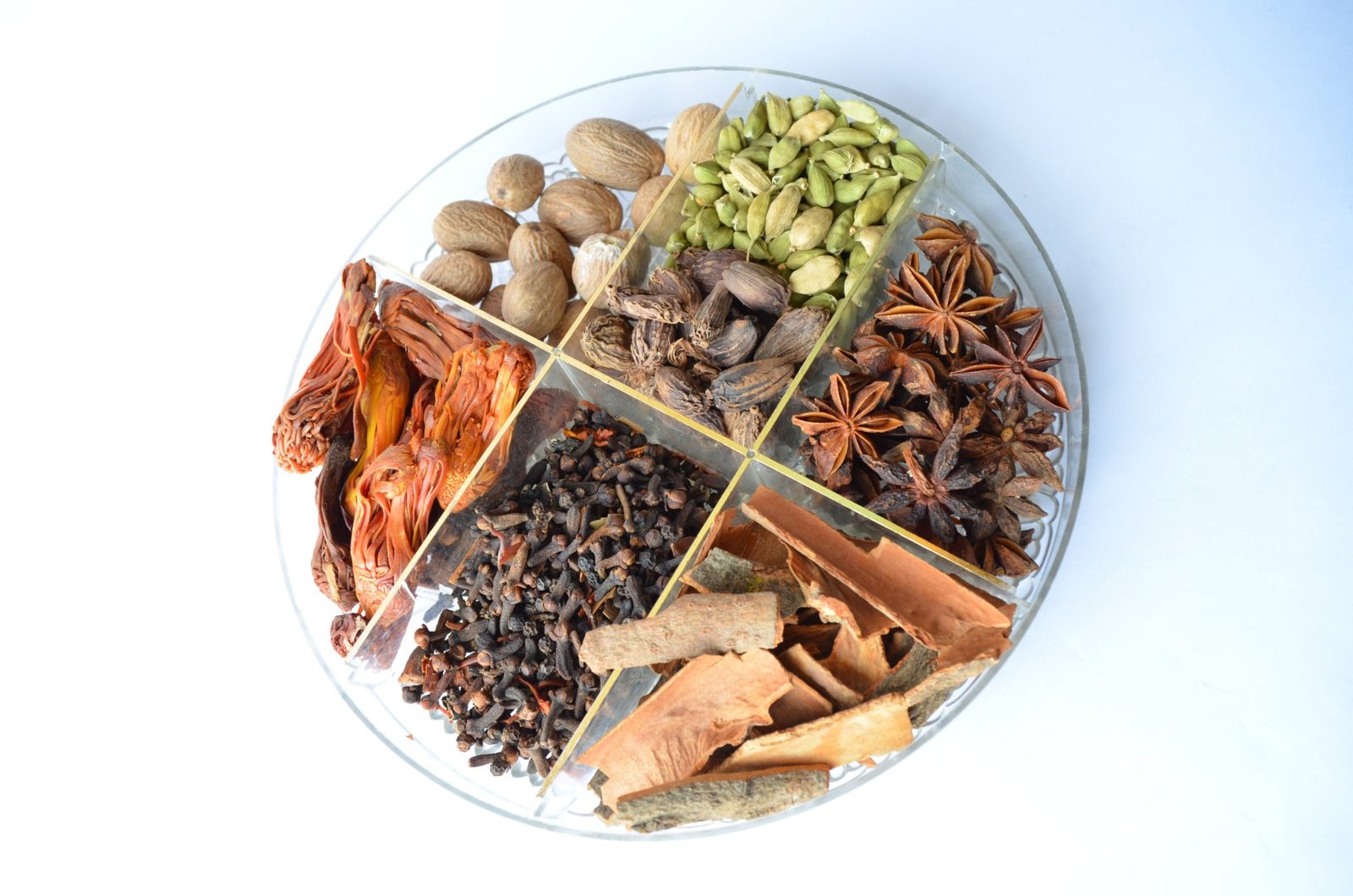
A guide to the spices
| Spice | What it is | What it is like | Where cooks use it |
|---|---|---|---|
| Allspice | Berries of a small tropical evergreen, picked green and dried in the sun until reddish-brown; grown mainly in Jamaica | One spice that tastes like cloves, nutmeg and cinnamon together | Ground, in cakes, cookies and pies. |
| Anise | Small gray-green seeds of a parsley-family plant | Strong and sweet, like licorice and fennel | Pastries, breads, cookies and candies; fish, shellfish and vegetables; anise drinks such as ouzo. |
| Star anise (Chinese anise) | The dried, star-shaped fruit of a magnolia tree from China; no relation to anise | Like anise but more bitter and pungent | Many Chinese dishes; part of five-spice powder. |
| Annatto | Small brick-red seeds of a South American and Caribbean shrub | Mild and peppery; colors food yellow-orange | Rice, fish and shellfish; crushed for Mexican achiote paste; a natural coloring for cheese and margarine. |
| Asafetida | A pale brown resin made from sap; the plant, native to India and Iran, looks like a giant fennel | Garlicky, with a foul smell that does not pass to the food | Indian and Middle Eastern food, in very small amounts. |
| Capers | Pickled unopened flower buds of a wild Mediterranean bush | Sharp, salty and sour, a flavor that comes only from curing in salted white vinegar. The smallest, nonpareils from Provence, are the finest. | Sauces such as tartare and remoulade; fish and game. |
| Caraway | Small crescent-shaped brown seeds; perhaps the oldest spice, traced back to the Stone Age | Peppery, like rye | German and Austrian breads, meats and cabbage; rye bread, cookies, cakes, cheeses and drinks. |
| Cardamom | Tiny dark seeds in a pod, from the ginger family | Strongly aromatic, lemony with a note of camphor | Indian and Middle Eastern food and coffee; Scandinavian breads and pastries; Danish pastries, coffee cakes and holiday baking. |
| Cinnamon | Thin bark of a small evergreen, peeled and dried in the sun; the best is pale brown, rolled into quills | Subtler than cassia | Pastries, breads, puddings, cakes, candy and cookies; also lamb and spicy dishes. |
| Cassia (Chinese cinnamon) | A coarser bark, close kin to cinnamon | Darker, sharper and stronger; cheaper than cinnamon | Better for savory food than sweet. In the United States, much so-called cinnamon is really cassia, since labels need not say which. |
| Cloves | Flower buds of a tropical evergreen, dried before they open | Sweet, pungent and very strong | Desserts, meat dishes, preserves; ground in mincemeat, fruit pies and plum pudding. |
| Coriander | Round beige seeds of the cilantro plant | Sweet, spicy and strongly scented; nothing like cilantro leaves | Indian food and pickling mixtures. |
| Cumin | Small seeds of a parsley-family plant from North Africa and the Middle East; they look like caraway | Strong and earthy; tends to take over a dish | Indian, Middle Eastern and Mexican food; sausages and some cheeses. |
| Fennel seed | Ridged greenish-brown seeds of the plant whose bulb is eaten as a vegetable | Like anise, but less sweet | Italian stews and sausages; fish, pork, pickles and vegetables; ground in breads, cakes and cookies. |
| Fenugreek | Small pebble-shaped seeds of a bean-like plant | Bittersweet, like burnt sugar, with a bitter finish; tints food pale orange | Indian curries and chutneys. |
| Filé powder | Dried, ground sassafras leaf, long used by the Choctaw | Spicy | Thickens and flavors Cajun and Creole dishes such as gumbo; also a table condiment. |
| Galangal (Thai or Laos ginger) | A rhizome, or underground stem, with reddish skin and pale or orange flesh | Peppery and ginger-like, smelling of pine | Peeled and crushed for Thai and Indonesian food. Fresh ginger can replace it. |
| Ginger | The knobbly rhizome of a tropical plant; a fresh piece is called a "hand" | Fresh: hot but sweet, with lemon and rosemary notes. Ground: spicier and less sweet. | Fresh in Indian and Asian food, with chicken, beef and curries; ground in gingerbread, fruitcake, cookies and pies; also pickled, candied, or kept in syrup or alcohol. |
| Grains of paradise (Guinea or Melegueta pepper) | Seeds of a West African reed-like plant, related to cardamom | Warm, spicy and a little bitter, like pepper; once used instead of black pepper | West African and North African (Maghreb) dishes; ras el hanout. |
| Horseradish | Large off-white root of a cool-climate plant, not related to radishes | Pungent | Russian and Central European food; roast meat, fish and shellfish. |
| Juniper | Round purple berries of an evergreen bush | Sweet and pine-like | Flavors gin; crushed into game such as venison and wild boar. |
| Mustard seed | Small hard seeds, yellow, brown or black, from three cabbage-family plants | No smell, but sharp and hot; yellow is mildest, black strongest | Pickling spice; prepared mustards. Ground mustard is a yellow powder of seeds, wheat flour and turmeric. |
| Nutmeg | The seed inside the fruit of a large tropical evergreen; it looks like a smooth piece of wood | Strong and sweet | Pastries and sweets, custards, puddings, spice cakes, doughnuts; meat and savory dishes too. |
| Mace | The lacy coating around the nutmeg seed | Like nutmeg, but more refined and costly; keeps its flavor longer than most ground spices | Pastry, pound cake, breads and puddings. Usually sold ground. |
| Poppy seed | Tiny hard blue-gray seeds of the opium poppy; ripe seeds hold none of the plant's drugs | Sweet and nutty | Breads, rolls, cakes, cookies and pastry fillings. |
| Sesame (benne) seed | Small, flat, creamy-white seeds | Nutty and earthy; stronger when roasted or ground into tahini, a paste | Breads, buns and meat dishes; a black kind is a Japanese condiment. Pressed for sesame oil, which does not go rancid easily. |
| Tamarind (Indian date) | Brown bean-shaped pod of an African tree | Sweet, yet very sour from its 12% tartaric acid | Souring agent in Indian curries and Mediterranean food; West Indian fruit drinks; chutneys and jams, thanks to its pectin; barbecue sauce, marinades and Worcestershire sauce. |
| Turmeric (Indian saffron) | Rhizome of a plant related to ginger, usually sold dried and ground | Mild woody smell; strong taste; bright yellow | Indian curries; a food coloring and dye. Never a substitute for saffron. |
| Wasabi | Pale green root, like horseradish but unrelated | Sharp, clean and herbal, a little hotter than horseradish | Sushi and sashimi; a spicy note in mashed potatoes or compound butter. Fresh wasabi is rare outside Japan; powder and paste are easy to find. |
20.4 Blends, and storing herbs and spices
Blends
Many cuisines have their own fixed mixes of herbs and spices. Most can be bought ready-made, but a chef can mix nearly all of them as needed, and that has one advantage: shop blends can hold a lot of salt.
| Blend | What goes in it | How it is used |
|---|---|---|
| Chinese five-spice powder | Star anise, Szechuan pepper, fennel seed, cloves and cinnamon, finely ground, in equal parts | Chinese and some Vietnamese food; very good with pork and in pâtés. |
| Curry powder | Usually turmeric, cumin, coriander, ginger, black pepper, cinnamon, cloves and mace. Formulas differ by maker: Bombay or Chinese style is mild and sweet, Madras style hot. | A European invention, made by 19th-century Britons back from India as an all-in-one spice for a curry. The name probably comes from the Tamil kari, sauce. |
| Fines herbes ("fine herbs") | Parsley, tarragon, chervil and chives | French cooking; made fresh or bought dried. |
| Jamaican jerk seasoning | Thyme, ground allspice, cinnamon, cloves and ginger, with onion and garlic; dry or wet | Rubbed onto, or used to marinate, chicken and pork before grilling. |
| Herbes de Provence | Dried herbs of southern France: usually thyme, rosemary, bay, basil, fennel seed, savory and lavender | Grilled or roast meat, fish and chicken; vegetables; pizza; even steamed rice and yeast bread. |
| Italian seasoning | Dried basil, oregano, sage, marjoram, rosemary, thyme, savory and other Italian herbs | A ready-made commercial mix. |
| Garam masala | A masala is any Indian blend of spices that are roasted and then ground. Garam means warm or hot. The dry form usually holds cardamom, cloves, cinnamon, peppercorns, coriander, fennel seed, nutmeg, turmeric and bay. | Add the dry blend near the end of cooking or sprinkle it on just before serving. Mixed with coconut milk, oil or tamarind water it becomes a wet garam masala, which goes in at the start. |
| Pickling spice | Mostly black peppercorns and red chiles, with some of allspice, cloves, ginger, mustard seed, coriander seed, bay and dill | Cucumber and vegetable pickles; stews and soups. |
| Quatre-épices ("four spices") | Mostly black pepper, plus less nutmeg, cloves and dried ginger; cinnamon or allspice may be added | Charcuterie and long-simmered stews. In French the name also means allspice. |
| Ras el hanout | A Moroccan blend that differs by supplier, often of twenty spices or more: for example cumin, coriander, cardamom, turmeric, cloves, cinnamon, pepper, grains of paradise, dried chiles and dried flower petals | Bought whole and ground by the cook when needed, for stews, rice, couscous and game. |
| Seasoned salt | Salt with one or more flavorings such as garlic, spices or celery seed, and often monosodium glutamate | A commercial product. |
Storing fresh herbs
Fresh herbs go in the refrigerator. Most produce, fresh herbs among it, is kept between 2 and 4°C (36–39°F), and 4°C (39°F) or colder is the safe temperature for any refrigerated food.
- Large bunches. Stand them upright with their stems in water, and cover the leaves loosely with plastic wrap.
- Small bunches. Cover them loosely with a damp towel.
- Extra herbs. Dry what you cannot use in an electric dehydrator, or spread them on baking sheets in an oven at 100°F (38°C).
Storing dried herbs and spices
Light and heat both destroy the delicate flavors of dried herbs and spices. Keep them in airtight containers that light cannot pass through, somewhere cool and dry. The dry storeroom itself is kept between 10°C and 15°C (50°F and 59°F), with stock rotated first in, first out.
- Dried herbs stored this way last two to three months. Kept airtight, they can last up to six months. see chapter 6: Fresh and dried herbs
- Whole spices should hold their flavor for six to nine months at least.
- Ground spices lose their flavor quickly.
- Stale spices have lost their spicy smell and leave a bitter or musty aftertaste. Throw them out.
Using herbs and spices
Herbs and spices are a cheap, simple way to give food character and variety. They add no fat and no sodium, and hardly any calories: most have only 3 to 10 calories in a teaspoon.
Dried for fresh. Fresh herbs taste and smell better, but dried ones are easy to find and easy to keep. Drying removes water, which concentrates the flavor, so use less. Use a third to a half of the fresh amount: for 1 tablespoon of fresh basil, use 1 teaspoon of dried. You can add more later if you need it. Another rule of thumb is about half the fresh amount. see chapter 6: Fresh and dried herbs
Timing.
- Delicate fresh herbs (basil, chives, cilantro, parsley and tarragon, for example) are best added when cooking is finished, because their aroma escapes easily.
- Most dried spices go in early so their flavor can develop. Whole spices need the longest; ground ones give up their flavor sooner.
- For some dishes, Indian curries among them, the cook first fries the ground spices in oil to bring out their aroma, then adds them.
- A raw dish made with ground spices, such as a salad dressing, needs to stand for several hours before its flavor is good.
Pairings. Some matches never go out of style:
- lamb with rosemary;
- salmon with dill;
- spinach with nutmeg;
- rye bread with caraway.
Less usual pairings can taste just as good and be far more exciting, so a chef needs to be willing to try new ones. That starts with knowing well how each herb, spice, condiment and vinegar tastes and smells.
Five rules for flavoring.
- The flavoring should never hide the main ingredient's own taste or smell. Keep a combination in balance so it does not overwhelm.
- Never use flavorings to cover up food that is poor or badly cooked.
- Go lightly with flavorings in food that will cook for a long time.
- Remember that a reduced liquid concentrates its flavorings, which can then take over the dish.
- Taste often while you cook, and season as you go.
Sources
This chapter is written from these open textbooks:
- Culinary Foundations — Cheramie & Thibodeaux, Chef John Folse Culinary Institute, Nicholls StateCC BY-NC-SA 4.0
- Fruits, Vegetables and Farinaceous Products — Thibodeaux & Bienvenu, Chef John Folse Culinary Institute, Nicholls StateCC BY-NC-SA 4.0
- The Chemistry of Cooking — Sorangel Rodriguez-Velazquez, LibreTextsCC BY-NC-SA 4.0
- Food Safety, Sanitation and Personal Hygiene — BC Cook Articulation Committee, BCcampusCC BY 4.0