Chapter 1 · The cook's trade
1.1 The origin of the restaurant
Inns and taverns
Selling cooked food is an ancient tradition. It goes back to the first civilizations. Places to eat grew in step with the development of cities and towns. In the Roman Empire and in ancient China, farmers took animals and goods to city markets. The trip could last several days, so they needed food and a bed along the road. The roadside inn met that need, and it was the earliest kind of restaurant.
An inn usually stood out in the country. Travelers sat together at one shared table and ate what the cook had made that night. Nobody chose a dish, because there was no menu.
Through the Middle Ages and on into the Renaissance, Europeans still bought ready meals mainly at taverns and inns. The food was simple, the same kind eaten in the homes of peasants and merchants. In Spain the eating houses were called bodegas, and they served tapas, small savory Spanish dishes. In England people ate sausage and shepherd's pie. In France the offer was soups and stews.
Guilds, and the fight over a stew
In medieval France, groups called guilds held monopolies over many prepared foods. Each guild owned its own kind of food, and selling it without belonging to that guild was against the law. Only the charcutiers, for example, could sell cooked meat.
| Guild | Its foods |
|---|---|
| Rotisseurs | meat roasted on spits |
| Patissiers | poultry, pies and tarts |
| Tamisiers | bread |
| Vinaigriers | soups and stews |
| Traiteurs | ragouts |
| Porte-chapes | feasts and celebrations |
Under this system, an inn's main job was to give people a bed and a drink, and guild members brought the food in. In 1765 a Paris shopkeeper named Boulanger, whose shop was near the Louvre, put cooked lamb into the stew he sold. The caterers' guild took him to court, and Boulanger won. In the twenty years before the Revolution, more shops like his opened across Paris.
The French Revolution, which sent Louis XVI and Marie Antoinette to the guillotine, swept the guilds away. Chefs who had cooked in noble and even royal houses were suddenly out of work. Many of them opened restaurants in Paris. They brought the look of aristocratic dining with them: fine china, cutlery and linen on the tables, now open to a whole new class of customers. Their menus also offered more choice than before.
The first true restaurants
▶ LectureThe new restaurants of the late 1700s borrowed upper-class habits. Guests no longer shared one table, as they had at inns. Each party had a table of its own, held for them by reservation, which was a new idea at the time. Antoine Beauvilliers was the first to offer a menu: a list of dishes served at set hours, at separate tables, in his Grande Taverne de Londre. Menus hung in frames, and at the end of the meal each guest was handed a check adding up the bill. China, cutlery and tablecloths became the marks of fine dining that they still are.
Some of these chefs-turned-owners grew rich. Many of their customers were provincial deputies who had come to Paris after the Revolution. Clever owners added comforts such as bathrooms, and charged guests to use them. Before the Revolution Paris had fewer than 50 restaurants. By 1814 a popular travel guide, the Almanach des Gourmands, listed 3,000.
Fine dining goes around the world
Paris kept adding restaurants through the 1800s. The same century brought the café, where there is no table service: customers order at a counter and serve themselves. Outside Paris, soup kitchens and dairy shops sold cheap home-style cooking to working people.
By the end of the century, steamships, railways and then cars had changed travel. Luxury tourism grew. Eating well far from home stopped being a mere need and became part of the pleasure of a trip, and dining at famous Paris cafés and restaurants was part of the tour.
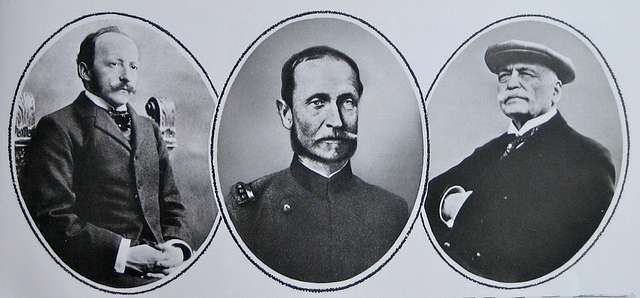
The biggest single influence on today's fine restaurants came from a partnership. César Ritz, a Swiss developer, worked with the French chef Auguste Escoffier to build the Grand Hotel of Monte Carlo. It was the first place to offer luxury rooms and gourmet food in one building. Ritz was the genius of service, décor and promotion. Escoffier brought in the brigade system to run the kitchen and cut the French sauces down to five mother sauces. He is known as the father of 20th-century French cuisine. Luxury hotels soon opened all over Europe.
In the 20th century the French restaurant spread across the globe; in Italy it became the ristorante. In the United States, the idea of the restaurant become an organic creation, continually changing and evolving in search of customers and profit. Before the century ended, American restaurants had given the world chains and modern fast food, and later a return to farm-to-table cooking.
How cooking styles changed
- Grande Cuisine (the 1600s and early 1700s): tables were loaded with dishes, set out like pieces of architecture. Diners sat down and ate whatever they could reach.
- Antonin Carême refined these dishes and served them across dozens of courses. He studied classical architecture so that he could build better confectionery showpieces.
- Cuisine Bourgeoise: other chefs mixed Grande Cuisine with the plainer dishes of the middle classes, and this new style was the result.
- Cuisine Classique: Escoffier refined Carême's Grande Cuisine into this modern form and carried French cooking into the 20th century.
- Nouvelle Cuisine (the 1950s): cooks put the natural flavor of food first. Broths and reductions took the place of roux and cream sauces, and food became lighter. Early masters included Paul Bocuse, Fernand Point, Roger Verge, Alain Chapel, and the brothers Jean and Pierre Troisgros.
- New American Cuisine: around 1971 a new idea took hold in America, fresh food cooked simply. Its leading figure was Chef Alice Waters at Chez Panisse, in California. Waters turned away from processed, packaged food and cooked fresh, seasonal, organic produce, fish and meat so that each kept its natural flavor.
America also has regional cooking of its own. Cajun and Creole cooking began to form in the early 1700s, out of what French, Spanish, African, German, English and Italian arrivals brought and what Native Americans already knew. It was the country's first regional cuisine. Other regional styles came later:
- Tex-Mex
- Southern soul food
- Florida cooking
- the Gee Chee and Gullah cooking of the Carolinas
- Pacific Rim
- Appalachian cooking
- three schools of barbecue, from Texas, Memphis and the Carolinas
In the 1950s Americans also took to fiery hot cooking from other cultures, such as:
- Mexican
- Hunan
- Szechuan
- Thai
- Korean
Sources
This chapter is written from these open textbooks:
- Culinary Foundations — Cheramie & Thibodeaux, Chef John Folse Culinary Institute, Nicholls StateCC BY-NC-SA 4.0
- Modern Pastry and Plated Dessert Techniques — BC Cook Articulation Committee, BCcampusCC BY 4.0
- Garde Manger: A Guide to the Cold Kitchen — Welsh & Thibodeaux, Finch Henry Job Corps Center & Nicholls StateCC BY-NC-SA 4.0